Part 1
Are you someone who wants more progress out of the gym than what you are currently getting? There are 168 hours in a week, it’s easy to spend 2-3 of them exercising but the difficult part is supporting our goals throughout the full week with what we eat throughout every day. Nutrition is the most significant recovery strategy we can manipulate to get up to 100% more progress out of our training. In this article we will discuss nutritional strategies to maximize muscle growth (strength) and further our discussion of information from the previous articles titled “How to Prevent the Age-Related Loss of Muscle Mass (Sarcopenia)”, “How to Begin a Fat Loss Diet”, and “How to Lose Body Fat While Keeping Muscle” so if you haven’t already, make sure you give those a read first.
The two most important aspects of any nutrition plan for muscle growth are the amount of protein and the calorie content we eat. Put simply, if we eat more calories than we burn, we will gain weight (calorie surplus), and if we eat less calories than we burn, we will lose weight (calorie deficit). If our goal is to maximize the strength improvements we experience from our training sessions, it is best to eat in a calorie surplus. If we eat in a deficit, our body’s will have less available resources (protein and amino acids) to support our training goals as the food we eat also needs to support our daily function. That being said, it is without a doubt, possible to make significant steps toward our goals without a calorie surplus, but eating in a surplus will amplify these results even further! It is important to note that eating too high in a calorie surplus (more than 200 calories above maintenance per day) will result in even more strength improvements BUT this comes at the cost of more body gain and can contradict many of our goals. If you want to learn how to find how many calories to eat to support your personal training goals, read our article titled: “How to Begin a Fat Loss Diet”. Our calorie intake is very important in regard to our training goals, but our protein intake is just as if not more important!
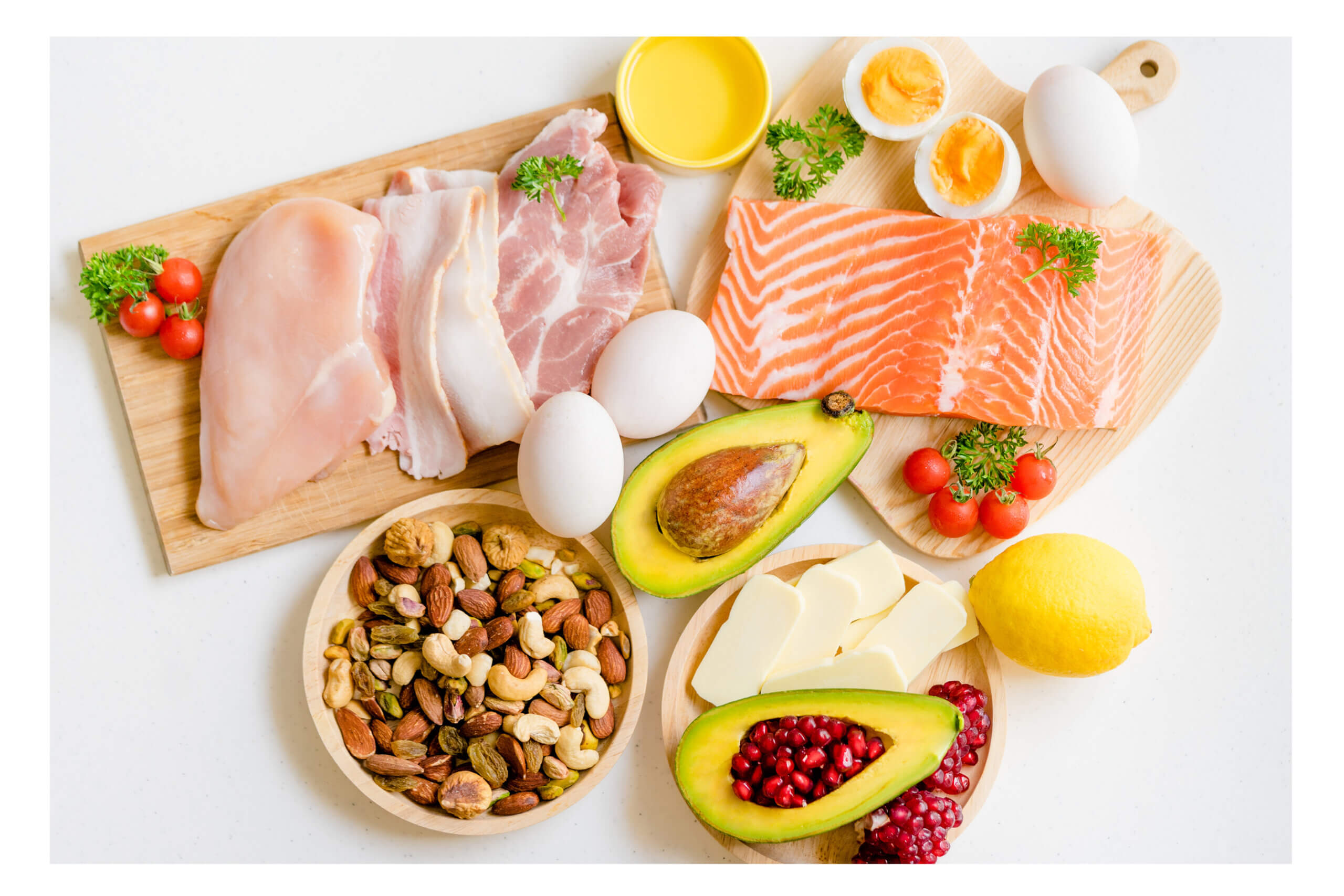
So why is protein more important than everything else we eat in terms of supporting our strength improvements? When we eat chicken, for example, we digest the meat into amino acids in our stomach which then are absorbed by our intestine wall, and moved into our bloodstream where they circulate and are transported to repair damaged cells (muscle cells in this case but this applies to any cell in our body in need of repair). There is somewhat of a “dose response” relationship with protein meaning, the more we eat, the more improvements we will make in the gym. This, however, is affected by the law of diminishing returns where once we eat more than 1g protein per lb. of body mass in a day, we start receiving “less of a benefit”.
Thinking in terms of protein per meal, if we eat 1g per lb body mass and have 3 meals with 1 “protein snack” during the day (4 protein “feedings”), a 180lb person would be eating 45g of protein per meal if evenly distributed (180g protein per day). Now, if this same person were eating 1.2g per lb body mass (216g), this would then come out to ~55g of protein per meal. Scientific evidence has shown us that an increase of protein intake per meal from 25g – 55g yields 0.01% more muscle protein synthesis (use of amino acids in circulation). We can clearly see how the law of diminishing returns takes place; however, many people have looked at this data and concluded that because our returns are diminished, we shouldn’t even try. A better way of looking at this, is that a 0.01% increase, is still in fact, an increase.
Part 2
For more information regarding carbohydrate and fat intake, reference the articles titled: “How to Lose Body Fat While Keeping Muscle”. For a short recap of the article, we need to ensure we are eating 0.4 grams of fat per lb. of body mass we have – this will ensure our body is given what it needs (essential fatty acids) in order to optimally regulate our hormone functioning throughout the day. Hormones dictate our body’s response to different stressors (For example: testosterone tells our body to build more muscle, and cortisol tells our body to break things down – non-optimal hormone function could result in too much cortisol and yield less improvements experienced from our training sessions). To find our carbohydrate intake, first we will use the information from the “How to Start a Fat Loss Diet” article to find our basal metabolic rate (BMR). Then we will decide how much protein and fat we will eat using the information presented in the “How to Start a Fat Loss Diet” article. Once we have our total daily calorie intake (up to 200 more than our BMR), our protein (at least 1g per lb. of body mass), and fat (0.4g per lb body mass) intake, we will then fill the rest of the calories in with carbohydrates.
For example, a 180lb male age 27, would have a BMR of 2,176 calories per day. In order to improve his muscle building capability without gaining excessive body fat, he will add 200 calories to this, bringing his total to 2,376 calories to eat per day. To start, we’ll say his protein intake is 1g per lb body mass at 180g per day. His fat intake will be 72 grams per day (0.4 x 180). Since protein and carbs have 4 calories per gram and fat has 9, adding his protein and fat intake together would put him at 1,368 calories. He will next fill in the rest of his calories (2,376-1,368=1,008) with carbohydrates which will come out to 252g carbs per day (1,008/4=252). This nutritional strategy is very effective for building strength as we mentioned above: the fat intake will allow for optimal hormone function, the protein intake is scientifically proven to provide our body with more protein than we can physically break down throughout our daily activities, and the carbohydrate intake will support resynthesis of our glycogen stores which we will discuss below.
Our bodies use carbohydrates primarily as energy stored in our muscles called glycogen and to fuel our central nervous system. This information is important to us because if you are someone who does not participate in more than 1 exercise session per day, we do not need a significant amount of carbohydrates (150-300+g carbs) as our bodies have no trouble fully replenishing our glycogen stores over a 24 hour period even with low carbohydrate intake (60-150g carbs) as we can utilize a slower process (Lipolysis) of turning our fat stores into carbs for glycogen resynthesis (glycogenesis).
So, using all of this information together: when not participating in multiple exercise sessions or competition events in a day, we can actually benefit from replacing some of our available calories from carbohydrate intake by eating more protein (up to 1.2g per lb. body mass). From the example used above, if this individual adopted a 1.2g per lb. body mass strategy rather than the 1g strategy, he would still eat 2,376 calories each day but will now eat 216g of protein instead of 180g and 216g carbohydrates (864 calories) each day. The fact that his protein and carb intake are the same is purely coincidence and will not happen in most cases. Now that we have a good understanding of the amounts of food, we should eat to support our goals, how often should we be eating to maximize our recovery?