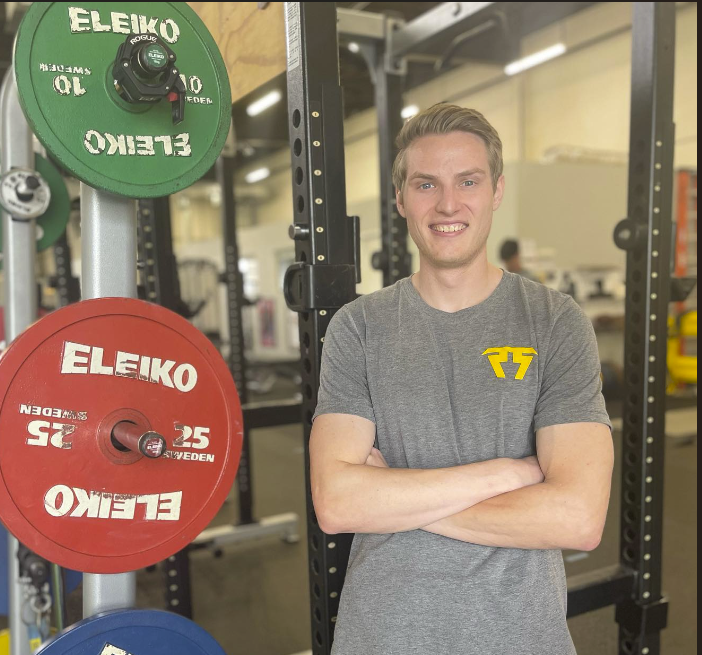
Author: Jessie DeThomasis
-

How Many Sets Per Week to Maximize Muscle Building
How many sets should we have per muscle group each week to make the most progress in the gym? There is significant scientific data suggesting that at least 10 sets per muscle group per week is sufficient to make significant progress with weight training. What we do not currently know is the extent to which increasing this number beyond 10 has on our progress parameters – and requires further scientific investigation. This does not however, mean we should only do 10 sets per muscle group per week.
If we are truly aiming to maximize the results we see from our training sessions, we can start a training phase at 10 sets per muscle group and add 1 or possibly 2 sets each week until we find what it is we can still recover from. It is easy for us to think that muscle soreness is indicative of recovery but unfortunately this is not the case. Muscle soreness resembles disruption to the muscle cell – once this disruption has passed and has been recovered from, we no longer feel muscle soreness. At this point, our muscles are recovered but full recovery comes from our whole body, not just our muscles.
Our central nervous system accumulates fatigue every rep of every set. This is why our level of soreness may make us feel like we have recovered but are unable to progress in the gym week to week. Our muscles are actually continuing to make progress with strength and size, we just can’t see it in our performance because our central nervous system is too fatigued for our performance to improve.
What we should do to combat this as briefly mentioned above, is add 1-2 sets per muscle group per week until we find our maximum recoverable volume (MRV) – in other words, finding the absolute maximum amount of training volume (sets and reps) we can handle in one week, while still being able to be fully recovered by the next time we train that muscle group. Taking a full training program (4-6 weeks) to increase sets each week until we find our MRV can be incredibly useful to prevent ourselves from overtraining and getting injured in the future.
The intensity of each set we perform heavily influences the amount of fatigue we accumulate throughout a training program. We discussed relative intensity in detail in our “How to Train for Muscle Growth” but will briefly discuss how we can manipulate intensity so we can still recover week to week.
We want to have at least one set per exercise where we are within 5 reps until failure (5 reps in reserve or RIR) 5 RIR has been shown to be about 90% as effective for muscle building as going all the way until technical failure (0 RIR) but with significantly less fatigue accumulation.
We can start a new training program with 10 sets per muscle group per week, with our last set of every exercise done within 5 RIR. The next week we can increase from 10 sets to 11 and now get our last 2 sets done within 5 RIR and so on. When calculating sets per muscle group per week it’s very important we first have a good understanding of what muscles are used throughout various movement patterns.
A quick example is body weight dips: this may seem like it as an exclusive chest exercise but we must remember that sets of dips also count towards our weekly totals for tricep and front deltoid involvement. Even if the chest is the primary mover, we will still factor these in as full tricep, shoulder, AND chest sets in our weekly totals. If this is done incorrectly, it can be very easy to miscalculate our weekly totals and begin overtraining.
If you want more information on what you can do if you think or know you are overtraining, give our article titled: “What to do When you Stop Making Progress in the Gym ” a read as it goes into detail with various strategies you can take to overcome this.
If you or anyone you know is interested in taking their training or athletic performance to the next level, give us a call (312-666-7147) or send us an email (info@performancetrainingsystems.com) and one of our many qualified professionals will be eager to help in any way we can!
References:
- Helms, 2015
- McNaughten, 2016
- Schoenfeld, 2016
- Tang, 2009
-

Flexible Dieting During Time Away From Home (Business Trips/Vacation)
In our last article we discussed how we can use flexible dieting to stay on track with our health and fitness goals while still enjoying nights out with friends and family. The strategies in the previous article however, mostly discussed how we can use our available resources like our kitchen at home or the exercise equipment at the gym to stay on track but what if we don’t have access to those resources like when we are away for several days on vacation? In this article we will dive into what we can do to stay on track when we go away on vacation or long trips and how to effectively incorporate physical activity when planning our vacations.
As with our last article, our health and fitness goals should never get in the way of us enjoying our lives. The most important part of flexible dieting is controlling what we can and not worrying about the rest. Once we understand that we will probably stray at least slightly off track from our goals, doing our best is really all we can do.
The first thing we can do actually starts in the planning process of our trip. We should do everything we can to plan each day with a lot of walking. Getting at least 10,000 steps each day is a great way to ensure we are staying relatively active, regardless of if we have access to a gym or not. Planning historical tours, long hikes, or even opting to walk rather than taxi to our next destination (if it’s close enough) are all great ways to get more steps in during our time away. In addition to increasing our overall daily activity through walking, as we know from previous articles, resistance training – specifically lifting weights, is the best way for us to stay on track with our strength and body composition goals.
Just the act of getting into a gym for resistance training during vacation can be troublesome since our friends and family will likely want to spend as much time with us as possible. It would be great if we could get everyone to go to the gym with us, but as we know how unlikely this is, finding a place to stay that has a gym or that is close to one is a great way to reduce the difficulty of getting our training sessions into our busy schedules. If we can support our goals with what we eat in addition to our training, there is no reason for us to believe we shouldn’t be able to continue our progress throughout our trip.
Being subjected to restaurant food for every meal every day does not make it easy to consistently choose the right foods to eat. We need to get as much physical activity as we can throughout each day to allow us more of a buffer for food since we know each meal will not be optimal. An effective strategy to take is for us to fill up on protein and vegetables first with every meal. This way we are providing our body with enough protein to recover from our physical activity, and are filling our stomachs with low-calorie, high-volume vegetables which help us keep the calories lower and be less likely to indulge in delicious desserts. But if vacation is about enjoying our time, wouldn’t we enjoy our time more if we only ate foods covered in delicious fat and sugar? The answer is yes…. in moderation.
It is easy to think that we would enjoy some big sides of cheesy potatoes or deep-fried foods more than a plate full of vegetables but if we first fill up on protein and veggies, we can still have some dessert, or one mozzarella stick rather than the whole basket and will become satisfied after eating a smaller amount since we are already full of veggies. As long as we end our meal feeling satisfied, we will still enjoy the experience just as much as if we ate the tastiest food items on the menu! Choosing what to eat at restaurants can be tricky when we are very hungry and want to enjoy our time with loved ones. In order to minimize how hungry we are when we sit down to eat, we can eat frequently throughout each day (every 2-4 hours) leading up to big meals at restaurants.
A great way to increase overall protein intake while away is to bring some protein snacks on the trip with you (protein bars/protein powder etc.…). Many people do not know this, but we are allowed to bring our own food on airplanes, so we are not subjected to eating horrible airplane food. Bringing 2 scoops of whey protein for every day we will be away will help ensure we have at least ~50 extra grams of quality lean protein each day – making it easier to hit our goals when we inevitably do go out to eat. Protein snacks throughout the day like protein bars, shakes, meat sticks, and greek yogurts are a great way to keep our hunger at bay and protein intake high. Eating protein snacks throughout a full day of hiking will lead us to be much less hungry by the time we finish, and thus, less likely to crave high fat and sugar foods for dinner and lunch. We must not forget that the most important part of avoiding indulging in tasty foods is to keep our calorie intake relatively high (no more than 500 calories below our BMR – [BMR outlined in previous articles]). If we are too far under our daily calorie intake (more than 500 calories below BMR) as soon as we smell or even see high fat and sugar foods there isn’t too much we’ll be able to do to stop ourselves from falling far from our goals with one meal.
As we mentioned above, the most important part of flexible dieting is enjoying your life. Once we are sure we will enjoy our vacation, we can work back from there and see where we can add physical activity or minimize high calorie food intake. Effective flexible dieting, especially on vacation, comes from effective planning; If we are prepared for what’s to come (plenty of physical activity each day and prioritizing protein and vegetable consumption) it will be much easier to stay on track with our goals. Let’s put it this way: if our goal is to enjoy our time on vacation, we would likely enjoy the trip as a whole more if we are able to hit our strength and body composition goals while still being able to enjoy our time with friends and family. To us, this sounds like a more enjoyable experience than one filled with stress about how much fat we’ve gained because we haven’t planned well enough.
If you or anyone you know is going away on a business trip or for vacation and would like some more information on how you can create a vacation plan to stay on track with your goals, give us a call (312-666-7147) or email (info@performancetrainingsystems.com) and one of our many qualified professionals will be eager to help in any way we can
References
- Antonio, 2018
- Helms, 2015
- McNaughten, 2016
- Wiss, 2022
- Tang, 2009
-

Flexible Dieting Strategies
Meeting our health and fitness goals should never mean we sacrifice doing what we enjoy. One of the most difficult parts of eating healthy is staying on track with our goals when we go out with friends or family and enjoy some delicious food or alcoholic beverages. The strategies we will discuss to overcome this are what we call “Flexible Dieting” strategies. We briefly touch on this topic in our article: “How to Stay on Track with Fitness Goals During New Year’s Celebrations” so if you haven’t already, give that short article a read for more in-depth explanations regarding alcohol consumption.
The two primary issues we encounter when eating at restaurants are avoiding the tastiest sounding foods and controlling the amount of food that we eat. The tastiest foods on the menu, unfortunately, are likely the ones containing the highest amounts of calories and it is easy to choose a relatively healthy food from the menu but then to order high calorie sides or desserts. An interesting fact in regard to hunger and the human body is that we are still evolutionarily and biologically wired to act as if we were still hunters and gatherers in the wild. What this means for us, living in a civilized society, is that when our body recognizes a nutrient composition in food that is high in fat, sugar, or both (none of which occurs naturally in the wild), our brains are immediately triggered to signal us to eat as much of it as we possibly can thinking “we may never encounter this food type ever again”. A large influx of energy from food sources that do not naturally occur on earth actually, believe it or not, have a very similar dopaminergic (dopamine) response to that of addictive drugs. We get so much dopamine released all at once, our bodies can, just like drug addiction, become dependent upon external sources (food, in this case) for dopamine secretion. This can actually make us feel like we need to keep eating to feel happy – no wonder it’s so hard to stop eating tasty foods!
Since our bodies are biologically wired for survival, our brains want us to eat high sugar foods (candy) because our body wants that fast energy release we get from carbohydrate absorption, and it wants us to eat high fat foods (things prepared with a lot of butter and oils Ex: deep fried foods) because these have the most energy and would increase survival rate higher than protein or carbs alone. When we eat foods that are high in fat AND sugar (desserts) these effects are exacerbated even further and things can really start to get out of hand fast as I’m sure many of us have experienced at one time or another. This is why it may seem like “you always have room for dessert” and is also why we need to avoid these foods when eating out with friends and family.
So, what can we do to avoid these things but still enjoy the time we spend out? We can either increase the amount of physical activity we do leading up to our dinner night or decrease the food we eat in preparation for a high calorie meal. For example, if we were going out to dinner Saturday night, we could exercise earlier that day and maybe even add some extra cardio to do at the end (having your heart rate at its highest at the end of a training session will keep our bodies burning extra calories for hours following training). On the other hand, if we are busy during the day and cannot exercise, we can implement a loose “intermittent fasting” strategy. As discussed in our previous articles “How to Eat to Maximize Strength and Muscle Gain”, “How to Lose Body Fat While Keeping Muscle”, and “Pre- and Post-Workout Nutrition Strategies for Strength Training”, we definitely want to make sure we keep amino acids and muscle protein synthesis elevated as much as we possibly can to allow our muscles to recover to their fullest extent. A true “intermittent fasting” strategy would involve no food consumption for a specified portion of the day; we recommend using this specified portion of the day to only eat mostly protein as you can still feed your recovering muscles during our “fasting” time period. This way, we can still ensure we are recovering from our training, but with a lower caloric intake early in the day, in preparation for our large, high calorie meal at night.
Strategies like these always seem very simple during explanation but can be difficult when it comes to the implementation. So, what if we exercise more, and eat less leading up to it but still end up eating too many calories (more than our maintenance calorie levels – further explanation can be found in previous articles)? We simplify these strategies by referencing the 24-hour circadian cycle but our body really adapts on a lifelong continuum of ever-changing circumstances. What this means, in simple terms, is that we shouldn’t worry about going over our calories one day in a week. As long as we are still under our maintenance calories for the entire week, we will still be putting ourselves in a position to lose body fat! For example, if our maintenance calorie intake is 2,000 calories, and we want to be 200 calories under each day to lose body fat, we can in turn, look at this in calories for the week. So 2,000 calories each day would be 14,000 calories for the week; eating 200 calories under maintenance each day would have us eating 12,600 calories for the week. If we go over one or two days, that is ok, we will just broaden our area of focus away from each day to each week. As long as we are still eating enough protein and spreading it out throughout the day to continue to feed our recovering muscles, its ok to go all the way down to 500 calories under our maintenance in order to make up for some larger meals or drinks we may have.
If you or anyone you know struggles with flexible dieting, give us a call (312-666-7147) or email (info@performancetrainingsystems.com) and one of our many qualified professionals will be eager to offer you any more information you want to learn!
References:
- Antonio, 2018
- Helms, 2015
- McNaughten, 2016
- Wiss, 2022
- Tang, 2009
-

How to Eat to Maximize Muscle Mass and Gain Strength-Part 3 and 4
Part 3
We digest protein into amino acids which are transported through our bloodstream to repair our damaged muscles. Amino acids circulating in our bloodstream need to be let into the cells they are trying to repair to do their job – our bodies must secrete insulin in order for this to happen. For example, if we were to drink some branched chain amino acids (BCAA’s) we immediately absorb these into our bloodstream, but without producing an insulin secretion, we cannot use these BCAA’s to repair our muscles. Our previous recommendation for BCAA consumption prior to fasted training works because resistance training elicits an insulin response.
Once amino acids are circulating in our bloodstream, it takes about 3-4 hours for this amino acid concentration to reach baseline again. Once we reach baseline, we will not be repairing our muscles anywhere close to what we were right after eating. For this reason, it is best practice to eat at least 25g protein every 3-4 hours (25g has been found to be the minimum threshold to “maximally” stimulate MPS). Protein sources that come from animals are our best bet, as we know our bodies produce more testosterone (testosterone is the MOST useful hormone with regards to strength improvements and body fat loss) by eating animal fats. It can be difficult to always have access to animal sources of protein, so we recommend eating something easy to prepare like a protein bar, Greek yogurt, or drinking a protein shake when we are unable to get a full meal at this 3-4 hour mark.
If you are someone who truly wants to maximize their nutrition and recovery strategies, at this point you may be wondering “if we want to always keep MPS elevated above baseline by eating a minimum of 25g protein every 3-4 hours, aren’t we wasting a large portion of the day by not keeping these levels elevated when we sleep?” The answer is: yes, we are wasting time. In order to combat this, we can use casein protein right before bed. Whey protein is very similar to animal sources of protein where MPS remains elevated for ~3-4 hours but casein actually doubles this to 6-8 hours before MPS returns to baseline – almost a full night of sleep! This slower circulation also comes with a slower absorption rate so while 25g of whey “maximally” stimulates MPS, you need twice as much casein (50g) to accomplish the same goal. Drinking a protein shake with 50g of casein right before bed will allow us to keep MPS elevated for most if not all of the time we spend sleeping – this way we can actually be consistently recovering for every minute of every day. Although for different reasons, this process of slower nutrient digestion and absorption also occurs when we eat large meals.
As previously mentioned, 25g of whey protein maximally stimulates MPS. This elevation in bloodstream amino acids lasts for 3-4 hours – the same applies for 25g of protein (3 Oz.) from chicken breast. This changes when we eat anything other than just protein in a meal. Most of the time we eat we are not exclusively eating protein. When our stomach needs to concentrate its efforts to digest carbs and fat in addition to protein, this process takes slightly longer and the increase in MPS is smaller in magnitude (this means we do not “maximally” stimulate MPS). So what this means for us, is that on average, when eating well-balanced meals consisting of protein, carbs, and fat, we should aim to eat between 45-70g of protein as this will allow us to still maximally stimulate MPS regardless of our bodies rate of absorption. When eating meals with mixed nutrient absorption, the previously mentioned MPS elevation of 3-4 hours, now changes to 4-5 hours. This is something we need to consider for instances like fueling strategies where if we eat too much too soon before an activity, our performance can decrease due to nausea and stomach cramps.
To this point we have discussed how much protein to eat but only briefly mentioned which protein sources and how often we should be trying to eat. Piecing together the information presented above, we should be trying to eat at least 25g of protein per meal to maximally stimulate MPS (45 – 70g protein for larger meals). We want to try to eat every 3-4 hours with any size meal. Even though MPS does not reach baseline at 3 hours with larger meals, we still want to keep MPS elevated as much as we can throughout the day. If you are someone who has a hard time eating every 3-4 hours, a good strategy is to alternate what you eat with each protein “feeding”. We can have a full meal, then around the 3-4 hour mark, if we are not hungry, we can have a protein snack like a protein bar, shake, or Greek yogurt (as long as it has at least 25g of protein). This way, we can keep MPS elevated throughout the day and don’t let our hunger stop us from meeting our goals! The amount of protein we eat in a day might be the most important part of eating for strength gain or muscle growth, but the type of protein we eat is also incredibly important.
Part 4
Our body digests protein sources into amino acids that are circulated through the bloodstream. Of the 20 amino acids, 9 are essential, meaning that our bodies cannot make these on its own. Because of this, we need to ensure we consume protein sources with complete amino acid profiles (consisting of essential amino acids). For the most part, it is relatively easy to get plenty of complete protein sources because all animal sources of protein have complete amino acid profiles. Specifically, leucine and isoleucine are the two most important amino acids we need to make sure we are eating – without these, our body will not understand how to utilize these amino acids to repair our muscle cells. Most of us will not have a hard time eating plenty of complete proteins but for those who practice a vegetarian or vegan diet, it can be tricky.
When investigating plant sources of protein, it can be easy to think that we are getting some protein in because we are literally eating protein. The difficult part comes when we realize that the protein source we just ate does not contain leucine or isoleucine. Below is a list of some of the protein sources that are either complete or incomplete to help guide your decision-making process:
Incomplete:
- Nuts
- Seeds
- Whole Grains
- Legumes (lentils, peas)
- Beans
- Rice
- Vegetables
Complete:
- Meat
- Poultry
- Fish
- Eggs
- Dairy (milk, yogurt, cheese)
- Whey
Complete Vegan/Vegetarian Options:
- Soy
- Buckwheat
- Quinoa
- Chia seed
- Spirulina
- Tempeh
- Amaranth
This is not an exhaustive list, but a good place to start. Just because protein sources are incomplete, that does not mean we cannot complete them ourselves. For example, let’s say for lunch you eat rice and chicken. If you were to eat the rice alone, our body would be unable to utilize those amino acids to repair our muscle cells, however, if we were to eat the same amount of rice in addition to chicken, the leucine and isoleucine from the chicken will then allow us to utilize the amino acids from the rice to repair our muscles and make us stronger. For those who do not eat meat, we can still utilize the same strategy of completing our amino acid profiles ourselves, but this will require considerable knowledge of amino acid profiles regarding a wide range of vegan and vegetarian food options. An easy way to complete our amino acid profiles is to make sure that we are eating at least 1 complete protein source with each meal (reference list above). To this point, we have discussed general timing strategies, but what nutritional strategies can we take before and after our training sessions to maximize our recovery?
In the past article titled: “Pre- and Post-Workout Nutrition Strategies for Strength Training” we discussed why it is a good idea to train in the “fed state” and how we have increased nutrient absorption following exercise. For these reasons, we recommend that you have a meal before training to begin recovery at the onset of training (25g protein and ~33g carbs -1 hour before training, for full meals, give at least 2-2.5 hours). We experience increased nutrient absorption, much like how MPS remains elevated, for 3-4 hours depending on the intensity of our training. This timing works out perfectly because if we have a protein shake immediately following training, MPS level will begin to dissipate around 3 hours so we can get two “protein feedings” in this “anabolic window” following exercise.
If we implement all the nutritional strategies discussed in this article, we will ensure that we are maximizing your recovery with what we eat! If you or anyone you know wants to improve their training, diet, or body composition, give us a call (312-666-7147) or send us an email (info@performancetrainingsystems.com) and one of our many qualified professionals will be happy to help in any way we can!
-

How to Eat to Maximize Muscle Mass and Gain Strength – Part 1 and 2
Part 1
Are you someone who wants more progress out of the gym than what you are currently getting? There are 168 hours in a week, it’s easy to spend 2-3 of them exercising but the difficult part is supporting our goals throughout the full week with what we eat throughout every day. Nutrition is the most significant recovery strategy we can manipulate to get up to 100% more progress out of our training. In this article we will discuss nutritional strategies to maximize muscle growth (strength) and further our discussion of information from the previous articles titled “How to Prevent the Age-Related Loss of Muscle Mass (Sarcopenia)”, “How to Begin a Fat Loss Diet”, and “How to Lose Body Fat While Keeping Muscle” so if you haven’t already, make sure you give those a read first.
The two most important aspects of any nutrition plan for muscle growth are the amount of protein and the calorie content we eat. Put simply, if we eat more calories than we burn, we will gain weight (calorie surplus), and if we eat less calories than we burn, we will lose weight (calorie deficit). If our goal is to maximize the strength improvements we experience from our training sessions, it is best to eat in a calorie surplus. If we eat in a deficit, our body’s will have less available resources (protein and amino acids) to support our training goals as the food we eat also needs to support our daily function. That being said, it is without a doubt, possible to make significant steps toward our goals without a calorie surplus, but eating in a surplus will amplify these results even further! It is important to note that eating too high in a calorie surplus (more than 200 calories above maintenance per day) will result in even more strength improvements BUT this comes at the cost of more body gain and can contradict many of our goals. If you want to learn how to find how many calories to eat to support your personal training goals, read our article titled: “How to Begin a Fat Loss Diet”. Our calorie intake is very important in regard to our training goals, but our protein intake is just as if not more important!
So why is protein more important than everything else we eat in terms of supporting our strength improvements? When we eat chicken, for example, we digest the meat into amino acids in our stomach which then are absorbed by our intestine wall, and moved into our bloodstream where they circulate and are transported to repair damaged cells (muscle cells in this case but this applies to any cell in our body in need of repair). There is somewhat of a “dose response” relationship with protein meaning, the more we eat, the more improvements we will make in the gym. This, however, is affected by the law of diminishing returns where once we eat more than 1g protein per lb. of body mass in a day, we start receiving “less of a benefit”.
Thinking in terms of protein per meal, if we eat 1g per lb body mass and have 3 meals with 1 “protein snack” during the day (4 protein “feedings”), a 180lb person would be eating 45g of protein per meal if evenly distributed (180g protein per day). Now, if this same person were eating 1.2g per lb body mass (216g), this would then come out to ~55g of protein per meal. Scientific evidence has shown us that an increase of protein intake per meal from 25g – 55g yields 0.01% more muscle protein synthesis (use of amino acids in circulation). We can clearly see how the law of diminishing returns takes place; however, many people have looked at this data and concluded that because our returns are diminished, we shouldn’t even try. A better way of looking at this, is that a 0.01% increase, is still in fact, an increase.
Part 2
For more information regarding carbohydrate and fat intake, reference the articles titled: “How to Lose Body Fat While Keeping Muscle”. For a short recap of the article, we need to ensure we are eating 0.4 grams of fat per lb. of body mass we have – this will ensure our body is given what it needs (essential fatty acids) in order to optimally regulate our hormone functioning throughout the day. Hormones dictate our body’s response to different stressors (For example: testosterone tells our body to build more muscle, and cortisol tells our body to break things down – non-optimal hormone function could result in too much cortisol and yield less improvements experienced from our training sessions). To find our carbohydrate intake, first we will use the information from the “How to Start a Fat Loss Diet” article to find our basal metabolic rate (BMR). Then we will decide how much protein and fat we will eat using the information presented in the “How to Start a Fat Loss Diet” article. Once we have our total daily calorie intake (up to 200 more than our BMR), our protein (at least 1g per lb. of body mass), and fat (0.4g per lb body mass) intake, we will then fill the rest of the calories in with carbohydrates.
For example, a 180lb male age 27, would have a BMR of 2,176 calories per day. In order to improve his muscle building capability without gaining excessive body fat, he will add 200 calories to this, bringing his total to 2,376 calories to eat per day. To start, we’ll say his protein intake is 1g per lb body mass at 180g per day. His fat intake will be 72 grams per day (0.4 x 180). Since protein and carbs have 4 calories per gram and fat has 9, adding his protein and fat intake together would put him at 1,368 calories. He will next fill in the rest of his calories (2,376-1,368=1,008) with carbohydrates which will come out to 252g carbs per day (1,008/4=252). This nutritional strategy is very effective for building strength as we mentioned above: the fat intake will allow for optimal hormone function, the protein intake is scientifically proven to provide our body with more protein than we can physically break down throughout our daily activities, and the carbohydrate intake will support resynthesis of our glycogen stores which we will discuss below.
Our bodies use carbohydrates primarily as energy stored in our muscles called glycogen and to fuel our central nervous system. This information is important to us because if you are someone who does not participate in more than 1 exercise session per day, we do not need a significant amount of carbohydrates (150-300+g carbs) as our bodies have no trouble fully replenishing our glycogen stores over a 24 hour period even with low carbohydrate intake (60-150g carbs) as we can utilize a slower process (Lipolysis) of turning our fat stores into carbs for glycogen resynthesis (glycogenesis).
So, using all of this information together: when not participating in multiple exercise sessions or competition events in a day, we can actually benefit from replacing some of our available calories from carbohydrate intake by eating more protein (up to 1.2g per lb. body mass). From the example used above, if this individual adopted a 1.2g per lb. body mass strategy rather than the 1g strategy, he would still eat 2,376 calories each day but will now eat 216g of protein instead of 180g and 216g carbohydrates (864 calories) each day. The fact that his protein and carb intake are the same is purely coincidence and will not happen in most cases. Now that we have a good understanding of the amounts of food, we should eat to support our goals, how often should we be eating to maximize our recovery?
-

What to do When You Stop Making Progress in the Gym
Have you ever been making steady progress in the gym only for you to spend an extended period of time not making any progress? In this article we will discuss what you can do when you hit a plateau with your progress in the gym.
In previous articles, we have discussed why it is important to train close to failure and to sometimes, even, train all the way to failure. But what happens if we train to failure every set every time we train? It might surprise you to learn that we actually do continue to make progress when training to failure every set; however, after a short time (1-2 weeks) we will be training a specific muscle group before it has had time to fully recover. Without giving our bodies time to dissipate these effects, this will result in us accumulating fatigue from one session to the next. This does not mean we will not be making progress but rather the progress we are making will become masked by our accumulated fatigue.
For example, on a Barbell Back Squat, let’s say we are able to do 8 reps with 185 lb on the bar and we train every set until complete failure; the next week our muscles will likely be stronger and able to move more weight but we are unable to actually go up in weight on the bar because we are still fatigued from our last session where we did Barbell Back Squat.
Too much accumulated fatigue is one of the most common reasons for plateauing in the gym. But what can we do to avoid this? And what can we do if we have already accumulated too much fatigue?
In order to avoid this, take a look back at the past articles titled: “How to Train for Muscle Growth” and “The Importance of Tracking your Progress in the Gym”. These articles outline how to safely and effectively implement progressive overload and how to train close to failure without accumulating too much fatigue.
If you have already accumulated too much fatigue and want to get back on track, it is advisable to take a “deload” or “active recovery” week. The purpose of this is to allow fatigue to completely dissipate before we begin serious training again while still keeping all of the strength we have gained up to this point. One strategy we can take for a deload is to do the same training we have been doing, using 100% of the weight we were using BUT only doing 50% of the total volume. So if we had 4 sets of 8 on the Barbell Back Squat, to deload we would use the same weight but only do 2 sets instead of 4. This way we continue to hold the strength we have gained but do a small amount of total volume, so we aren’t accumulating too much fatigue.
Another strategy you can take to dissipate fatigue is to begin a new training program. During the first week of a training program with new exercises, we never exactly know what our working weight is right away. So we can start with the weight low and work up from there. For example, if you have 4 sets of 8 reps, start with the weight low, and work up from there to the point where only the last one or two sets are at our working intensity (~5 reps in reserve).
[Sample progression for Barbell Back Squat]
- Set 1: 115lb x 8
- Set 2: 135lb x 8
- Set 3: 165lb x 8
- Set 4: 185lb x 8
This will allow us to learn the correct technique of the exercises we will be doing next, while still using the muscles we want to keep our strength with so that we do not lose any of it. You can see how this strategy is similar to the deload week but this way, we can use our “deload” time to practice the technique for future exercises.
If you or anyone you know is interested in taking their training more seriously and taking all of the guesswork out of your training decisions, give us a call (312-666-7147) or send us an email (info@performancetrainingsystems.com) and one of our many qualified professionals will be happy to help!
References
- Helms, 2015
- Schoenfeld, 2016
-

Staying on Track with Fitness Goals During the Holidays
With New Year’s Eve coming up we know that we will all be tempted to indulge in food and drinks to celebrate and bring in the New Year. This article will discuss what we can do to stay on track with our fitness goals while still being able to enjoy our time around friends and family.
The bottom line is that we should not let our fitness goals get in the way of enjoying our lives. That being said, there are definitely some strategies we can take to keep us from drifting too far from our goals.
The first, and easiest strategy we can take is to get some exercise on the day you know you will be celebrating. As long as the intensity is high enough, we will experience excess post oxygen consumption (EPOC) from exercise (strength training, biking, running, rowing, stair master) where we will increase our calories burned as our body continues to deliver oxygen to our working muscles throughout the rest of the day. If you know you will be eating or drinking more than usual, do a little extra exercise as this will help us stay on track and avoid us from gaining unnecessary weight. Exercise leading up to the celebration is a great way to get ahead of everything but what should we do during our celebrations?
The issue we find with New Year’s Eve festivities is that those of us over the age of 21 have a tendency to drink alcohol. Drinking calories is counterintuitive to our fitness goals because we do not get as full from drinking our calories as compared to eating food.
One contributing factor of satiety (how full we get) is time spent chewing and since we do not chew liquids, we do not get as full. Something we can do to combat this is obviously not to drink but for those of us who still might have a few drinks, we can choose drinks with clear alcohol (white rum, vodka, tequila, gin, etc.) as these have significantly lower calorie content than dark liquor (dark rum, whiskey, bourbon, etc.) or beer.
If you are someone who mixes alcohol with soda, opting for a diet soda or tonic/seltzer water is a good alternative. When consuming alcohol, we should try to drink at least half of the fluid we drink in alcohol in water. So, if we drink 32 Oz. of alcohol throughout the night, we should at least drink 16 Oz. of water. Consuming electrolytes will also help our body retain the water we drink; so beginning the night with a low sugar sports drink or cup of water with an electrolyte packet would help us stay hydrated even more!
Regardless, if you take part in drinking alcohol or not, we should all make a serious effort to eat well during this time. We discussed the rather obvious issue there is with drinking calories during the holidays but what isn’t as obvious is what we can do with our diet. The issue here comes from the macronutrient composition of the foods that are commonly served at holiday parties. Since this is a time of celebration, most of the food served at these events tend to either be high in fat, or high in sugar as we enjoy these the most.
Foods with a combination of high fat and high sugar do not naturally occur in the world. Since our body’s physiology is built through evolutionary adaptations, as soon as we sense this non-naturally occurring food substance high in sugar (fast absorbing energy) and fat (high concentration of energy) we are immediately signaled (with dopamine) to eat as much as we possibly can as our bodies are unsure when we will be able to consume this much energy again. This is highly individual but can be the reason some of you may notice it is easier to abstain from eating certain foods rather than only have a little bit – once the flood gates open there’s no stopping.
Staying away from these foods is a good idea but keeping our consumption of them low is also an acceptable strategy to take as long as you have good self-control. In addition to staying away from foods high in fat and sugar, we can try to fill ourselves up on protein (we need this to recover from our training and to meet our fitness goals) so that we are already too full to stuff ourselves by the time dessert comes around.
As we said before, the most important part of all of this is to not let our fitness goals get in the way of us enjoying our time spent around friends and family. It is important for us to make an effort to be healthy but only if it does not take away from us enjoying the moments that matter most.
If you have ever wondered what you could be doing differently during the holidays to continue to meet your goals, give us a call (312-666-7147) or send us an email (info@performancetrainingsystems.com) and one of our many qualified professionals eager to help will be in touch with you!