Author: Jessie DeThomasis
-

Yes, Mobility Is That Important
By: Bobby DeThomasis
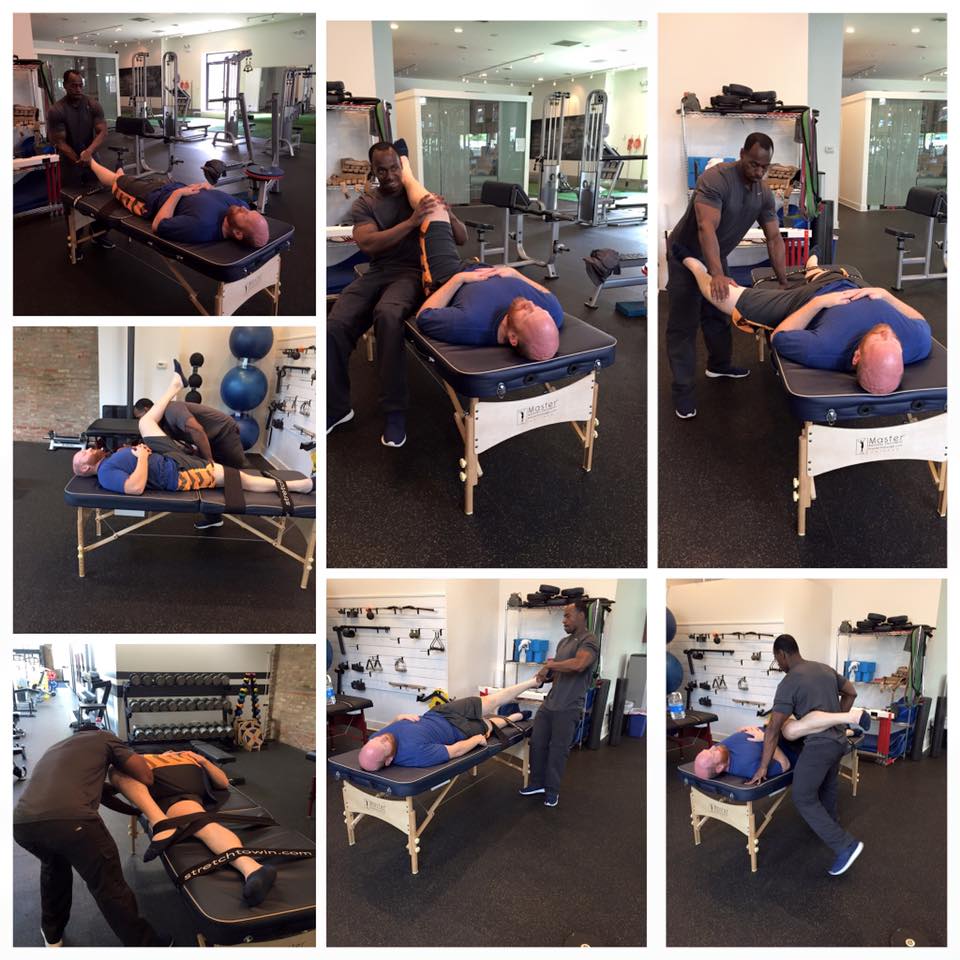
Everyone knows that stretching is important (at least for most people, but not necessarily for all), however I still think that not nearly enough emphasis is put on it and when mobility exercises are performed they are often done incorrectly. In all honesty I am probably one of the worst culprits of mismanaging and under emphasizing my mobility training. For a long time I was under the mindset that since I only have about 75 minutes per day (if that) to take care of my body I would rather go through a quick dynamic warm up, some quick self stretches and get straight into my workout. Admittedly it actually took me a long time to even get to the point where I would devote even 15 minutes per day to my dynamic warm up. For a long time my warm up would consist of doing one set of an exercise with 50% of my RM on the bar and I would start to train. I would find though that it always seemed like I was spinning my wheels with my training. I would train hard for a couple months and all the sudden my recurring back issue would flair up (as it often does as soon as I start to squat or deadlift heavy) and I would have to regress my training to doing unilateral work and rehabilitation. I would start to stretch more and my back would start feeling better at which point I would start squatting again and just perpetuate the same cycle.
This went on for quite some time (more then I would like to admit) and although deep down I knew what I had to do (devote more time toward proper mobility training) I kept falling into the same cycle of back pain from heavy squatting, stretch, feel better, squat heavy, re-injure and start stretching again. As much as it pains me to say it, I am now a full believer in that sometimes you need to take a step back, re-evaluate what you are trying to accomplish and develop a proper course of action. A course of action that may be hard to accept initially because let’s face it, for people who see working out as a huge part of their lives it is difficult to say “I am going to spend less time working out and more time stretching.” Not to mention, anyone who has poor mobility would agree that stretching is basically the worst thing ever. It is uncomfortable, tedious, boring and so slow to improve. I am here to insure you that in this case the juice is definitely worth the squeeze and if you are someone like me who seems to always be spinning their wheels with their training and constantly getting set back with injuries, a proper mobility program may just be the answer.
OK, so now that we agree that mobility is important, what is the best way to design a proper mobility program? First off, you have to find out where you have restrictions. The best way to determine flexibility issues would be to get evaluated by someone who has an in-depth understanding of a movement analysis system that could provide the necessary information. Since the details of how to perform a proper movement analysis are outside the scope of this article I would suggest finding typical symptom patterns associated with your daily life activities. For instance, it is very typical for a hockey player to develop restriction though their hip flexors, hip rotators, quads, pectoralis minors and shoulder internal rotators. A person that sits behind a desk all day coincidently will develop similar restriction patterns in that they typically get very tight through their shoulder internal rotators (subscapularis, and teres major) pectorals minor and subclavius in the upper body. Hip flexor complex (rectus femoris, psoas, iliacus and tensor fascia latae) and hip rotators in the lower body. I have also found that many people (athletes especially) test positive for ankle restriction going into dorsiflexion. This lack of dorsiflexion could have significant implications on a persons ability to squat, deadlift, olympic lift and play many sports while staying healthy. Some experts have estimated that the single best indicator for lower body injury potential is to measure a persons ankle dorsiflexion. If you are a person that is blessed with good ankle dorsiflexion then congratulations, everything is going to be easier for you. For the rest of us poor souls we had better focus a good amount of time on improving ankle dorsiflexion. There are plenty of good videos online that can show stretches for dorsiflexion. I would highly recommend implementing some of those stretches into your daily routine. I should note however that unfortunately for some people improving dorsiflexion is not always as easy as just stretching. If you are the type of person that gets a pinching sensation in the front part of the ankle when you go into dorsiflexion (as opposed to feeling a stretch in the achilles tendon area) then you most likely have an ankle impingement. Ankle impingements are difficult to treat on your own and I would recommend seeing a qualified coach/therapist for proper guidance.
This article is meant to emphasize the importance of proper flexibility and mobility. As I mentioned earlier, everyone is different. One person may have significant restrictions through their quadriceps where as another may be more restricted through the hamstrings. The best way to understand where your restrictions lie is through an in-depth movement analysis by a knowledgable coach/therapist. If you would like more information on how a structured flexibility program could help improve your sports performance and decrease your susceptibility to injury email us at info@performancetrainingsystems.com and you can set up an appointment for an in-depth evaluation.
-
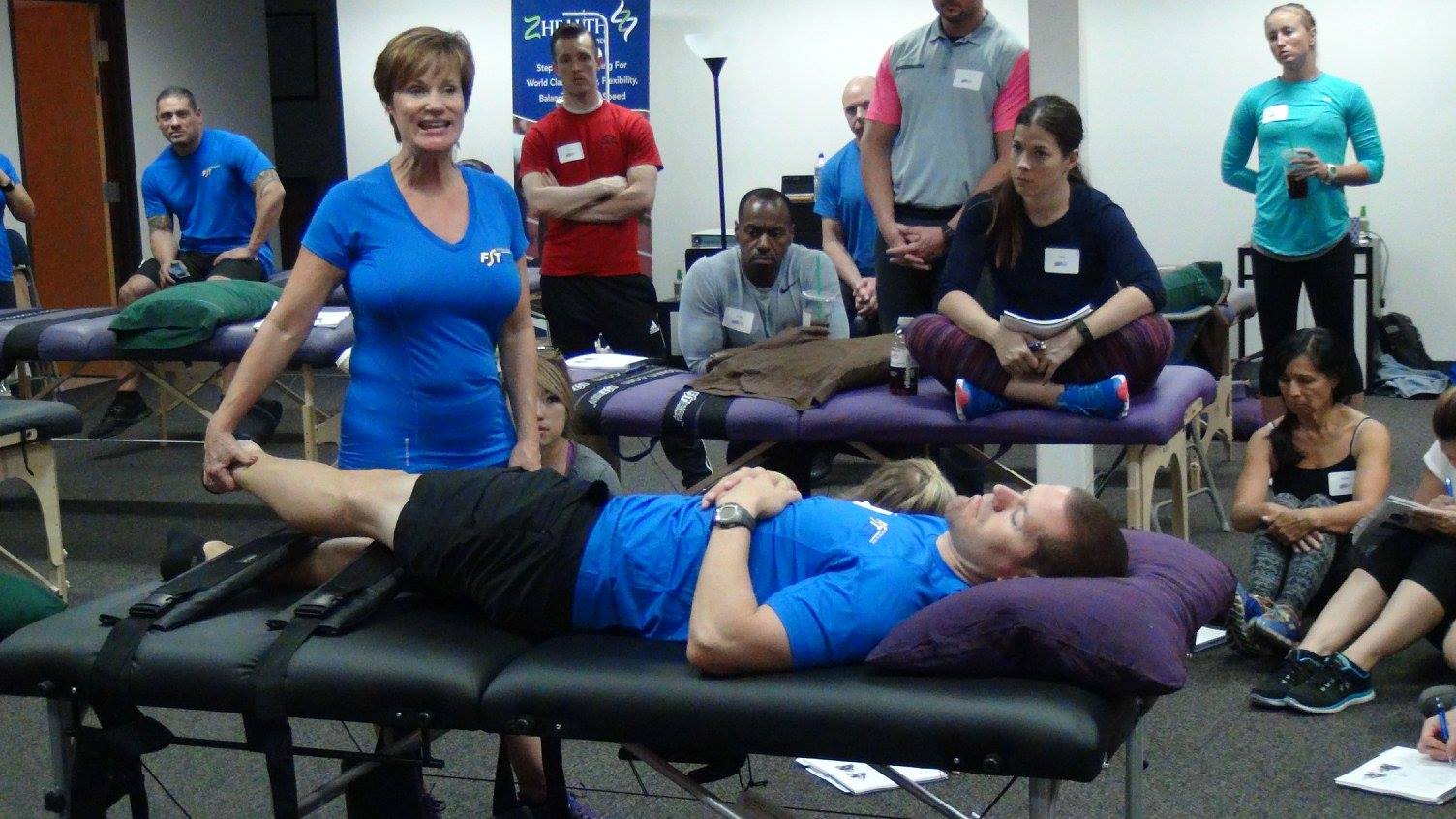
PTS now has four Level 2 FST Therapists!
Congratulations to Devon and Cortez for completing their Level 2 FST Certification! We are proud of you! Email info@performancetrainingsystems.com to schedule a stretch and try out their new moves!
-
The Need For Individualized Sport Specific Training
by: Bobby DeThomasis
Throughout my career as a strength and conditioning coach I have had the opportunity to spend time with many other coaches. I have learned a lot from some great coaches and it has made a huge impact on my abilities to design effective and efficient programs for my athletes. Although each coach that I have learned from has their own unique style and methodology, the one thing that I have found to be consistent amongst great strength and conditioning coaches is the principle of individualization. It is no secrete that every athlete (in fact every person) has unique physiological characteristics that makes him or her different from all other athletes. Despite the fact that there are many athletes that play the same sport and even the same position, no two athletes are exactly alike. It is due to that fact that I completely disagree with the concept of group training for athletes. Personally, I believe that any coach that designs his or her program around grouping athletes together is both misguided and off base with their approach towards athletic development. I understand that this may be a bit controversial in that most of the well known training centers around the country follow the method of group training but if you break down what it takes to appropriately develop athletes to their fullest potential you will see that group training is an ineffective way to train athletes.
To start, I am a full believer that ever single rep counts. I know that sounds a bit cliche however being in the industry for over 12 years and having trained hundreds of athletes from all ages I can say with full confidence that it is the truth. Most athletes, regardless of what level they compete at, do not have an in-depth understanding of anatomy and physiology (nor should they as this is the obligation of a strength and conditioning coach and the reason that we have jobs). With that in mind, most athletes will go about an exercise and under most circumstances go through a faulty motor pattern or try and compensate their movements to get more reps or move more weight. It is the job of the strength coach to make sure that every one of their athletes is performing reps with as close to perfect form, every time. If the coach does not implement the concept of proper form, the athlete will likely start to develop compensation patterns which over time could considerably increase his or her potential for injury. It is difficult enough to get one athlete to perform perfect reps however if a coach is training more than one athlete at a time the likely hood of being able to stay on top of all the athletes in the group is very low (most likely not possible at all).
Secondly, as I mentioned before, no two athletes are exactly alike. Even if the coach is working with athletes from the same sport that play the same position there are still many physiological factors to take into account when designing a training program. Several of these factors (although there are many more to consider) are muscle fiber make up, previous injury history, training age and musculoskeletal imbalances. When I design a training program for an athlete these are just some of the factors that I take into account. With all these things to consider it is easy to see how there are many ways that athletes can differ from one another. For example, I was training two professional hockey players that were the same age, played the same position and were very similar in size and weight however one of them had a previous ACL reconstruction surgery and was lacking full knee range of motion and the other had subluxated his glenohumeral (shoulder) joint causing joint laxity and muscle imbalances. Despite the fact that both these athletes appeared to be physiologically similar they had very different needs. As such the program that was appropriate for one was completely inappropriate for the other and vice versa.
One more point to be made about program design for athletes is the lack of use of an evaluative process. Here at PTS, every new athlete goes through a very specific evaluation. The eval gives us the information that we need to design the athletes training regimen. Coaches that design programs prior to evaluating their athletes (or that don’t use an eval at all) are doing their athletes a major disservice. I have seen coaches that develop their programs months before their athletes start training. Although I appreciate their lack of procrastination it always baffles me that a coach can develop a program for an athlete without actually knowing what physiological qualities the athlete needs to improve. This would fall under the ‘one size fits all’ approach to training that would be similar to what you can expect with group training.
With all that being said, I have found one exception to the rule. When we put our athletes through conditioning programs (or what we like to call sport specific energy systems development) I believe that it is appropriate to group several athletes together. Typically conditioning sessions consist of pushing/pulling sleds, and other “modified strongman” exercises that usually have less of a technical component then other exercises (like a hang clean). The purpose of the conditioning session is to improve the functionality of the specific energy system that the athletes will be using while they are in a game or competition (for example hockey would fall into the anaerobic lactic energy system). Fortunately, for most sports, this is a static factor in that it does not change. For the most part a “shift” in hockey will last about 40-50 seconds and the athlete will typically have about 2 minutes in between “shifts”. As long as you are staying within the specific parameters of the sport I believe that you can group athletes together (pending they play the same sport) while doing energy system development training.
I truly believe that program individualization is the key factor for athletes to get the most out of their training regimen. Although group training might seem like a more “fun” way to workout, remember that activities are fun, training is designed to produce results. Do not confuse the two.
If you are an athlete and would like to get started on a specific training program that will be individualized to your needs email us at info@performancetrainingsystems.com to set up your initial evaluation.
-

The Sleep Conclusion
By: Jessie DeThomasis
Trying to fix my sleep crisis has been a goal of mine for more than a few years now. In other words, I have insomnia and interrupted sleep. I also have a type A personality, high anxiety and a never ending ‘to do’ list that is always on my mind. So I started to read any sleep articles, journals, studies, and books that I could get my hands on. Finally I came across “The Promise of Sleep” by Dr. William Dement. This book solidified what every other well researched article concluded.
In the beginning, I thought these texts would give me the best sleep supplement protocols and I would fall asleep within five minutes of hitting the pillow for a nine hour deep sleep. After reading “The Promise of Sleep” I realized there are no such supplement protocols that exist or any promise of a long slumber without some personal accountability.
A quote from Dr. Dement. “When sleep works – and when we allow it to work- our minds and bodies are in tune and working together”. To me this means that sleep makes us feel happy, motivated, improves memory, productivity, learning, and creativity. Sleep allows us to reach our potential.
Great! I want to reach my potential everyday. I keep on reading and working on my sleep habits.
Dr. Dement states that sleep is restorative to the soul and spirit. There is plenty of evidence supporting the argument that sleep is the most important predictor of how long you will live, perhaps more important than if you smoke, exercise, or have high blood pressure. During sleep our body is constantly repairing itself and stimulating protein synthesis. Much of this repair is done by Growth Hormone. Growth Hormone stimulates protein synthesis, helps break down fats that will supply energy for tissue repair, and stimulates new cell growth. Growth hormone is released into the bloodstream through the action of Growth Hormone Releasing Hormone (GHRH). It turns out that GHRH is a sleep inducer.
In a clinical study where animals were administered drugs that block the release of GHRH, it was recorded that they were able to stay awake much longer, even after they had been severely sleep deprived. As we wake up and work through the day our bodies get ready for action and the opposite biochemical profile is put in place. Sugars are used for energy, stress hormones rise, which raises our adrenaline and excitability.
The psychological stresses of our lives interfere with sleep and aid in the suppression of our immune system. Sleep is tightly woven into healthy neurological and hormonal function. If you want to have good moods, high energy, clear thoughts and actually recover from your training, then you need to make sleep a priority. Make the changes you would for any other goal or priority, such as focusing on your diet or spending more time with friends, it takes effort and hard work.
In the end I learned a that sleep supplements are not the answer to my insomnia, but paying attention to my personal sleep needs and adopting a sleep smart lifestyle are the answers. This may mean calming down early, saying no to friends, not answering the phone or emails, and leaving dirty dishes in the sink. I finally realized that I am willing to make the sacrifice for a good night’s sleep.
References
Dement, William C.; and Christopher Vaughan (1999). The Promise of Sleep: A Pioneer in Sleep Medicine Explores the Vital Connection Between Health, Happiness, and a Good Night’s Sleep. Dell Trade Paperbacks.
-
Recover with FST!
One our clients is enjoying an amazing FST (Fascial Stretch Therapy) session! If you’re training hard you need to make sure you are recovering as well. It is important to program recovery into your weekly workout schedule. Increase mobility and relax with FST!